A Hidden Sanctuary in the Heart of Phahurat
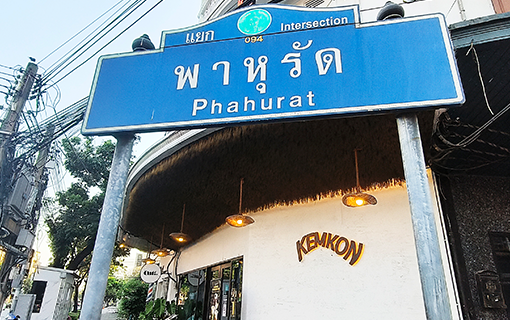
Phahurat Intersection sign—just behind it lies a hidden culinary gem, KEMKON, known for its rich and flavorful dishes.
Step into Phahurat, one of Bangkok’s oldest trading quarters, and you’ll feel it immediately, the rhythm of fabric merchants, the scent of spices, and the quiet harmony of cultures woven together. Thai-Chinese and Thai-Indian communities have shaped this neighborhood for generations, making it a vibrant tapestry of traditions, beliefs, and everyday life.
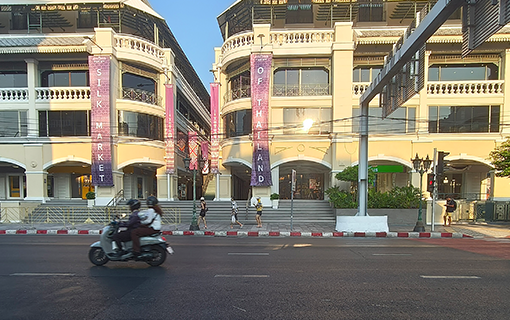
The Old Siam Plaza, viewed from the entrance of Thipphawari Alley.
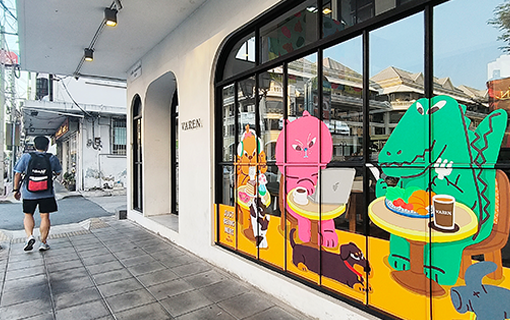
VAREN Café, located along Tri Phet Road near the entrance of Thipphawari Alley—an ideal spot to pause before your visit.
But beyond the bustling textile shops and the polished façade of The Old Siam Plaza, there’s a quieter story waiting to be discovered.
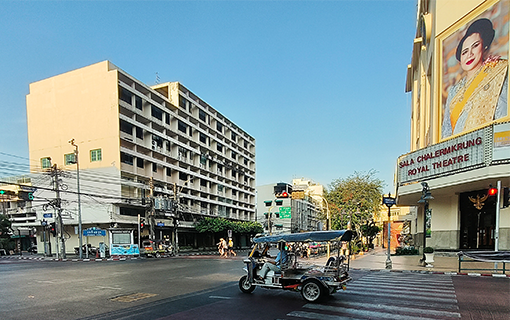
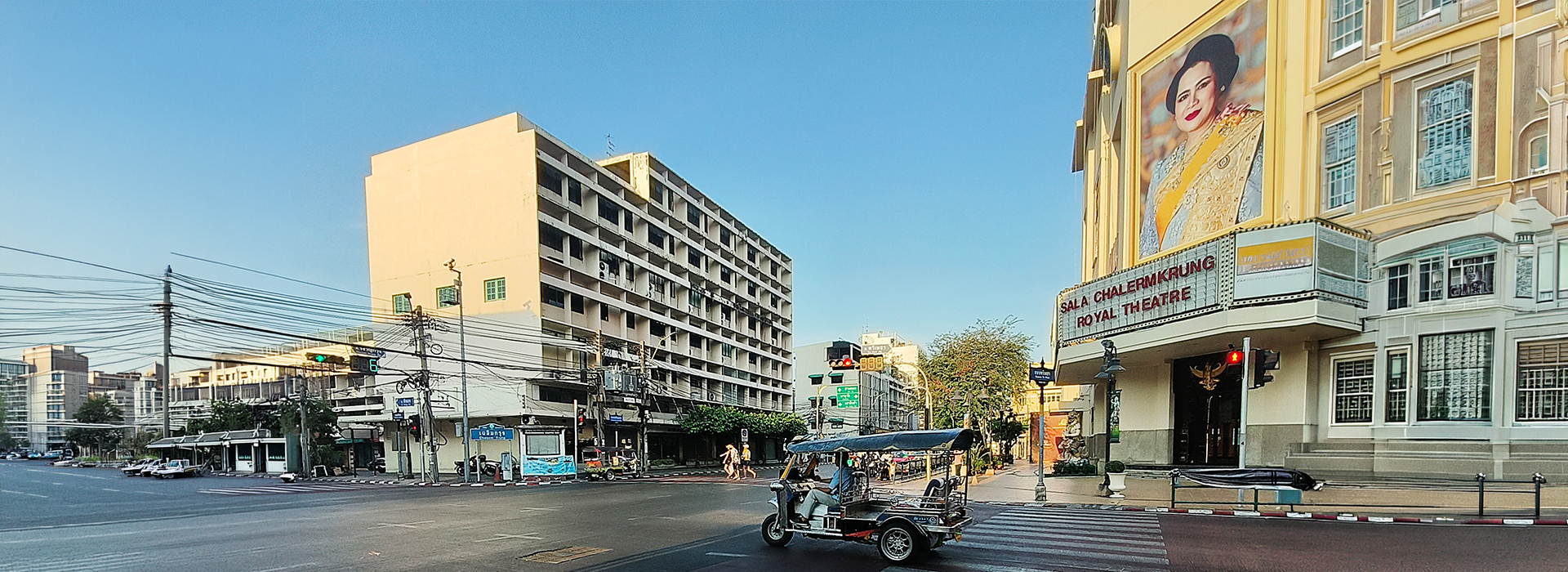
Chalermkrung Intersection—the walking route from MRT Sam Yot to the temple. This view looks back toward Tri Phet Road near VAREN Café
Walk just a little further, into a small alley that many pass by, and you’ll find Wat Thipphawari Wihan, a place that feels almost like a secret.
A Temple Reborn Through Time
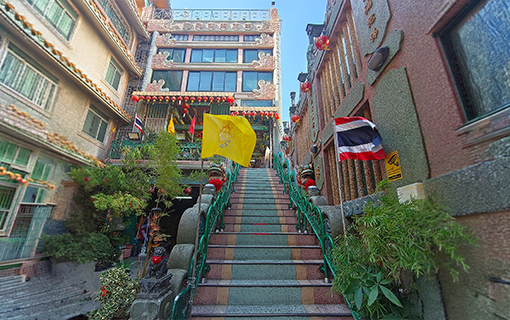
The staircase leading up to the main hall and sanctuary of Wat Thipphawari Wihan.
Known locally as Kammalowee, this temple traces its roots back to the era of King Taksin of Thonburi. Originally granted to Vietnamese settlers, it later evolved into a Chinese Mahayana temple, reflecting the ever-changing cultural landscape of Phahurat.
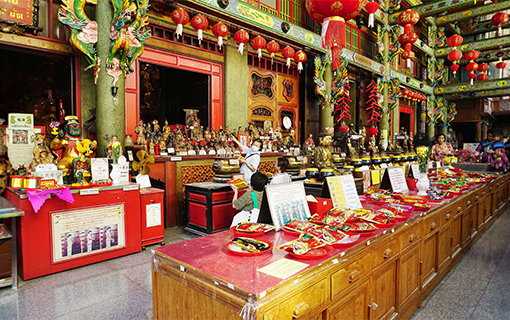
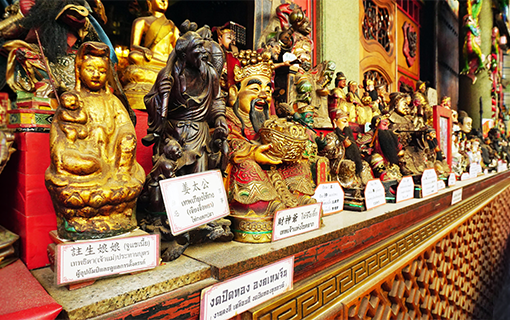
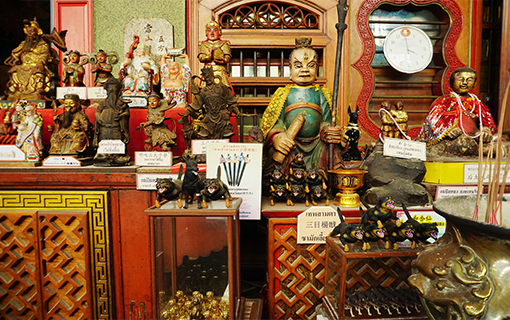
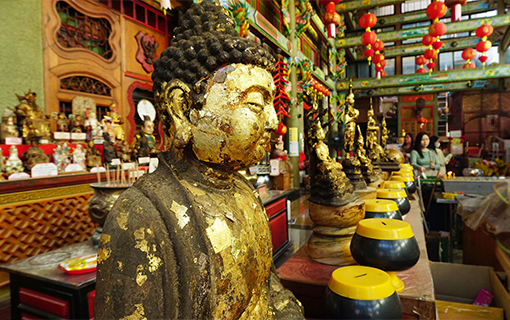
The upper hall (outer section) houses a remarkable collection of deities, including Buddha images representing each day of birth.
Unlike traditional Thai temples, Wat Thipphawari Wihan rises as a four-storey structure, a transformation shaped by history. After a devastating fire once swept through the area, the temple was rebuilt into the architectural form you see today, unexpected, yet deeply symbolic of resilience.
A Sanctuary of Stillness and Faith
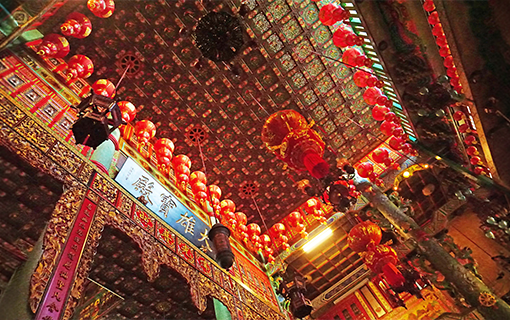
Inside the main sanctuary, a high-ceilinged hall creates a sense of openness and calm, with natural airflow throughout.
Inside, the atmosphere shifts.
The noise of the market fades into silence. Soft light touches intricate sculptures. The air carries a sense of calm.
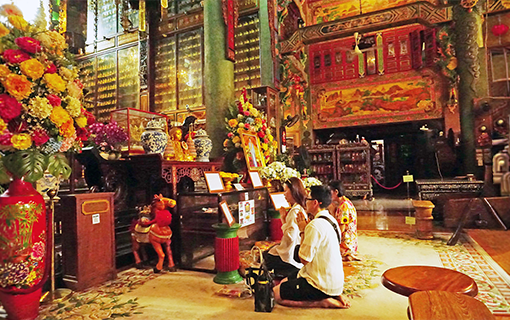
The altar inside the sanctuary, where visitors come to pray and make offerings.
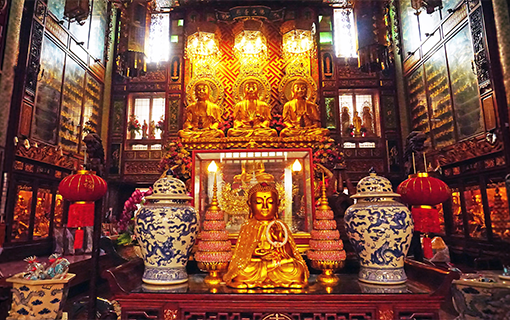
The statue of Shakyamuni Buddha, the principal figure enshrined at the heart of the temple.
The temple houses an extraordinary collection of Chinese deities, from the familiar Goddess Guanyin and Guan Yu to lesser-known figures like the Three-Eyed God and the Windmill God, believed to help transform misfortune into fortune.
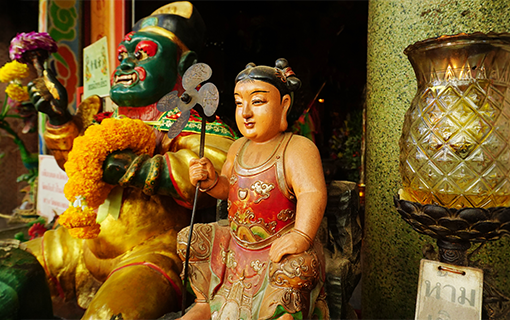
The Windmill God (right) and the Green Dragon God (left), both believed to hold powerful spiritual significance.
At its spiritual heart lies the hall of Shakyamuni Buddha, where a profound stillness invites visitors to pause, reflect, and simply breathe.
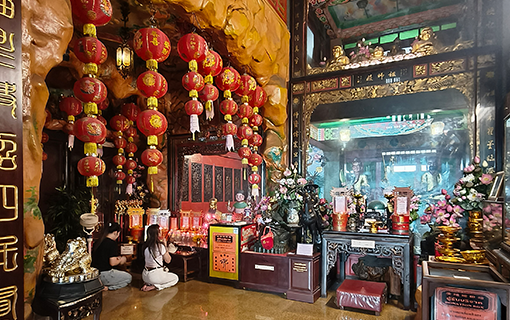
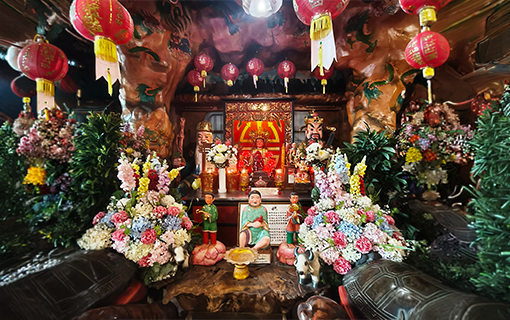
On the left side of the sanctuary, the temple features a Dragon Cave—a mystical space filled with intricate deity sculptures.
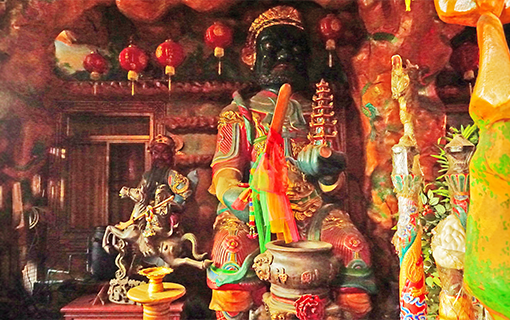
The statue of Guan Yu, enshrined within the Dragon Cave.
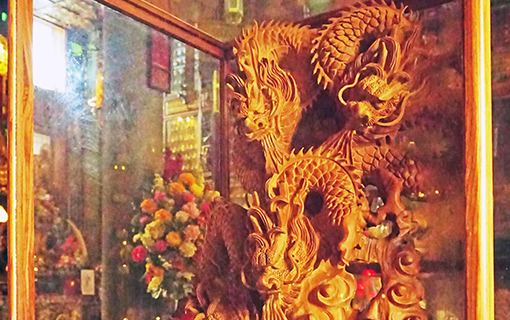
A finely carved wooden dragon, displayed in a glass case—an exquisite example of traditional craftsmanship.
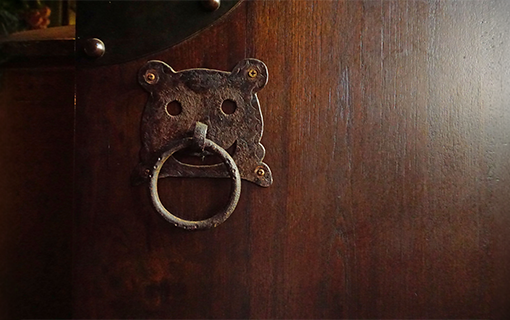
A decorative metal door fitting near the Dragon Cave, believed to resemble a panda—an unexpectedly charming detail
This is not just a place of worship; it feels like a living museum of faith, devotion, and artistry.
More Than a Visit, A Meaningful Journey
Wat Thipphawari Wihan is easy to reach, just a short walk from MRT Sam Yot, yet it remains beautifully under the radar. Perhaps that’s what makes it so special.
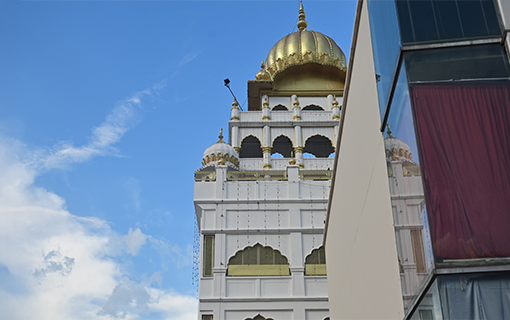
Gurdwara Sri Guru Singh Sabha, the Sikh temple of Phahurat, and the largest of its kind in Thailand.
After your visit, continue your journey through Phahurat:
- Visit the nearby Sikh Temple (Gurdwara Sri Guru Singh Sabha)
- Explore local markets and fabric streets
- Pause at a cozy café or discover hidden local eateries
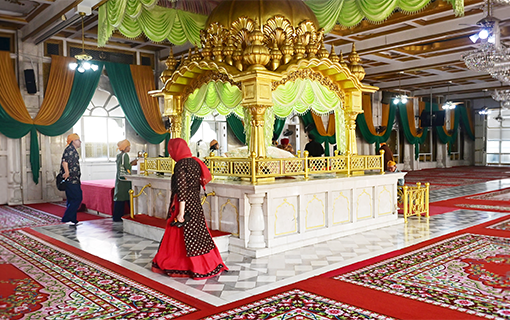
The sacred scripture altar inside the Sikh temple, a place of deep reverence and spiritual significance.
This is community-based travel at its finest: slow, meaningful, and full of stories waiting to be uncovered.
Let Us Take You There
At Pacific Leisure, we believe travel should go beyond sightseeing.
We curate experiences that connect you with culture, history, and local life—authentically and responsibly.
Discover hidden Bangkok with us. Let every journey tell a story.
Contact us to design your personalized community experience, Pacific Leisure Thailand
#PacificLeisure #MeaningfulTourism #BangkokHiddenGems #Phahurat #WatThipphawari #CommunityTourism #CulturalJourney #ExploreBangkok #SustainableTravel #HiddenBangkok
Editor in Chief : Nampetch Siramanon
Editor: Pacific Leisure (Thailand)
Content Creator : Mr. Saroj Na Ayutthaya
Navigate
Terms & Privacy
Pacific Leisure (Thailand) Limited
No. 888/154, Mahatun Plaza Bldg., 15th Floor,
Ploenchit Road, Lumpini, Pathum Wan,
Bangkok 10330, Thailand
Phone : +66 22 542 966
Mobile : +66 63 224 1384, +66 81 138 2983
Email : info@pacificleisureth.com
Website : https://www.PacificLeisureTH.com
(TAT) Licensed No: 11/00161