
A Slow Day in Thonburi: Rediscovering Wat Ratchasittharam A Quiet Royal Temple, a Living Meditation Tradition and the Heritage of an Old Bangkok Neighbourhood
Someone once described Wat Ratchasittharam Ratchaworawihan as “a temple that seems to have been forgotten, despite its remarkable history and status as a second-class royal monastery.”
Perhaps that feeling comes from its location in Thonburi, where several celebrated temples—including Wat Arun, Wat Rakhang and Wat Prayurawongsawat, regularly welcome streams of Thai worshippers and international visitors. In comparison, Wat Ratchasittharam remains quietly tucked away in Soi Itsaraphap 23, almost unnoticed by those following Bangkok’s familiar sightseeing routes.
Yet this sense of being overlooked is precisely what makes the temple worth discovering.
Located less than 200 metres from MRT Itsaraphap Station, Wat Ratchasittharam offers a meaningful one-day journey into Bangkok’s spiritual heritage, one that combines Buddhist art, meditation history, neighbourhood culture and a slower, more responsible way of travelling.
Beyond the Temple Wall
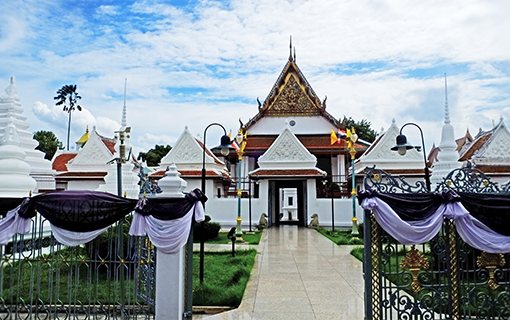
The ubosot of Wat Ratchasittharam, viewed from the street outside the temple grounds.
From the entrance of the soi, the first glimpses of the temple appear above the surrounding walls: the tips of ancient chedis and the rooflines of its historic viharns.
Continue walking into the temple grounds, and the scale of the complex gradually reveals itself. Two large chedis rise prominently above clusters of smaller stupas, creating a distinctive architectural composition. Two viharns stand to the right, while the main ordination hall, or ubosot, is situated farther to the left.
The atmosphere is noticeably different from Bangkok’s more famous temples. There are no large tour groups moving quickly from one landmark to another. Instead, visitors can pause, observe the architectural details and experience the temple as a living place of worship.
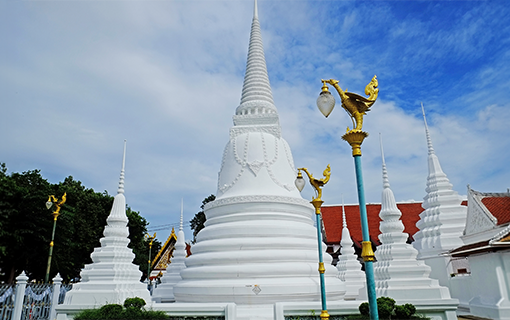
Phra Sirijumbhat Chedi, the imposing principal chedi restored during the reign of King Rama IV.
The atmosphere is noticeably different from Bangkok’s more famous temples. There are no large tour groups moving quickly from one landmark to another. Instead, visitors can pause, observe the architectural details and experience the temple as a living place of worship.
From Wat Phlap to a Royal Monastery
Wat Ratchasittharam was originally known as Wat Phlap, an ancient temple believed to date back to the Ayutthaya period.
Its importance grew during the reign of King Rama I, who ordered the construction of a new royal monastery beside the original temple and later combined the two sites. The temple became the residence of Phra Yanasangwon Thera, better known as Somdet Phra Sangkharat Suk, a highly respected meditation master.
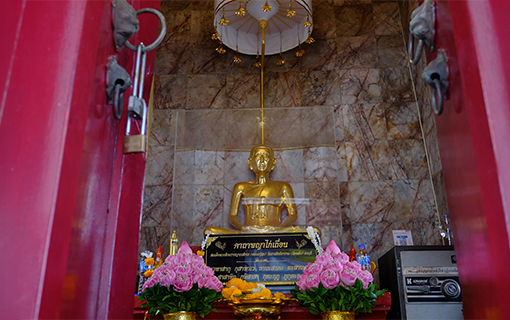
A statue of Somdet Phra Sangkharat Suk, the highly respected meditation master whose teachings established Wat Ratchasittharam as an important centre of Vipassana practice.
King Rama I held him in great esteem and encouraged members of the royal family to study meditation under his guidance. As a result, Wat Ratchasittharam became one of Bangkok’s important centres for Vipassana meditation, a spiritual legacy that continues to define the character of the temple today.
During the reign of King Rama III, the monastery underwent further restoration. New structures were added, including chedis, viharns, a preaching hall and a Chinese-style residence. In 1831, the temple was officially given the name Wat Ratchasittharam.
One of its principal chedis was later restored during the reign of King Rama IV and received the royal name Phra Sirijumbhat Chedi.
These layers of royal patronage are reflected throughout the temple, but its true significance extends beyond architecture. Wat Ratchasittharam preserves the story of meditation practice, Buddhist education and the close relationship between Thailand’s monarchy and religious institutions during the early Rattanakosin period.
Buddhist Art Worth Taking Time to See
A visit may begin at Viharn Phra Phuttha Metta, where the principal Buddha image is carved from green jade. A representation of the Buddha’s footprint can also be found here.
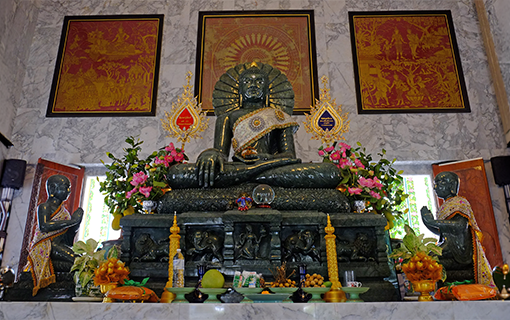
Phra Phuttha Metta, the principal Buddha image in Viharn Phra Phuttha Metta, beautifully carved from green jade.
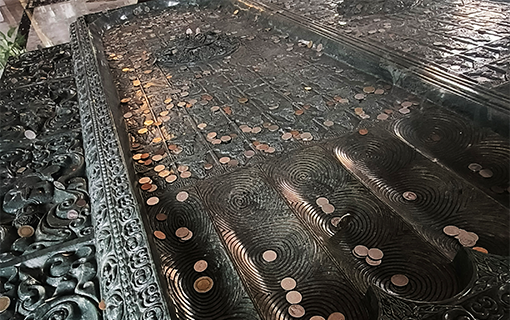
A representation of the Buddha’s footprint enshrined inside Viharn Phra Phuttha Metta.
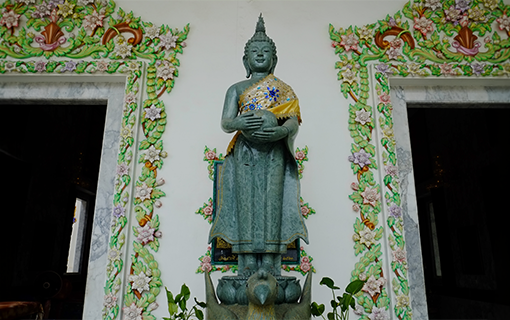
A Standing Buddha image in the Receiving Alms posture, situated in front of Viharn Phra Phuttha Metta.
From this viharn, continue to the central sanctuary before walking towards the ubosot. The approach offers one of the temple’s most unusual and meaningful architectural features.
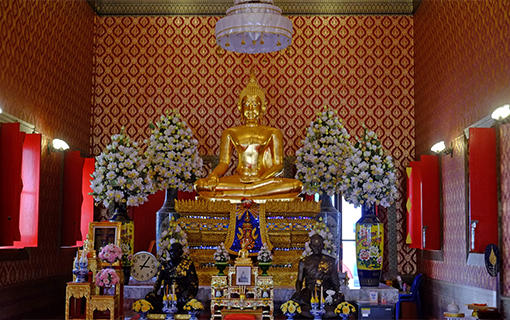
The principal Buddha image enshrined inside the temple’s central viharn.
At many Thai temples, an ordination hall is surrounded by a covered gallery lined with Buddha images. Wat Ratchasittharam is different. Instead of a continuous gallery, 24 small meditation residences known as kuti vipassana are arranged around the ubosot.
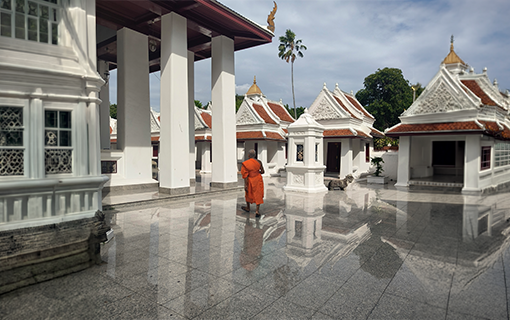
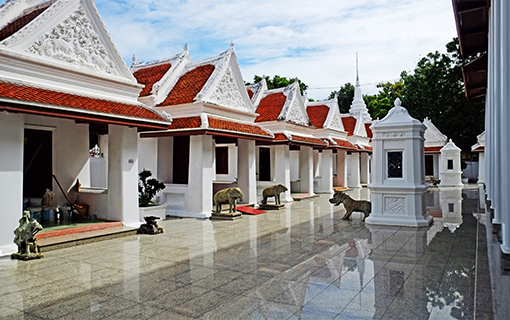
The temple’s historic ubosot surrounded by 24 small kuti vipassana, or meditation residences—a distinctive feature reflecting the monastery’s long tradition of Vipassana practice.
Each residence contains a platform for a Buddha image and a meditation seat for a monk. One of the kuti near the front-left side of the ubosot houses a statue of Somdet Phra Sangkharat Suk, honouring the meditation master whose teachings shaped the temple’s spiritual identity.
These modest structures are not simply decorative. They are physical reminders that meditation has been central to life at Wat Ratchasittharam for more than two centuries.
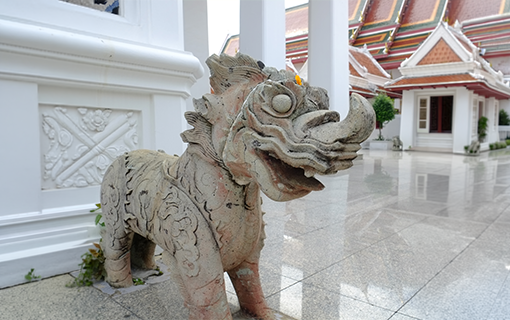
Sculptures of mythical and symbolic creatures associated with Buddhist and traditional religious beliefs, arranged around the ubosot.
Inside the ubosot is the principal Buddha image, Phra Phuttha Chularak, together with valuable murals and decorative works. Access may occasionally be restricted during monastic prayers or religious activities. If this happens, visitors are encouraged to wait respectfully or admire the architecture from outside. The rhythm of temple life should always take priority over sightseeing.
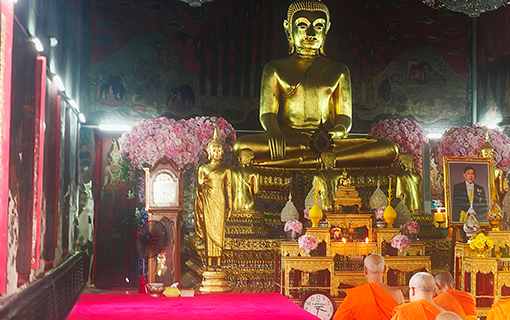
Phra Phuttha Chularak, the principal Buddha image inside the ubosot, is a gilded stucco figure in the Subduing Mara posture. Measuring 2.53 metres across the lap and 3 metres in height, the image is regarded as one of the temple’s most significant works. King Rama II sculpted the Buddha’s head, while King Rama III completed the body and bestowed the name “Phra Phuttha Chularak.” Its artistic style continues traditions inherited from the Ayutthaya period.
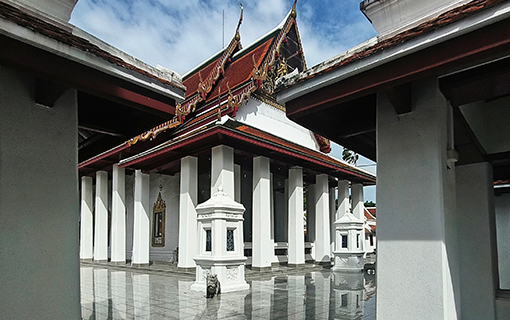
The ubosot was originally constructed during the reign of King Rama I and extensively restored under King Rama III. Built in the traditional Thai style, the brick-and-stucco structure is surrounded by an outer colonnade and crowned with a multi-tiered roof. Its upper pediment features gilded woodcarving and coloured-glass decoration depicting the Hindu deity Vishnu riding Garuda, framed by elaborate kanok motifs.
Tea, Community and the Many Layers of Itsaraphap
Exploring the neighbourhood is an important part of the experience.
Near the entrance to Soi Itsaraphap 23 is Achcha Tea Shop and Homemade Bakery, a small café specialising in tea rather than coffee. Its selection includes Indian teas and delicately scented floral blends, making it a pleasant place to rest after walking around the temple.
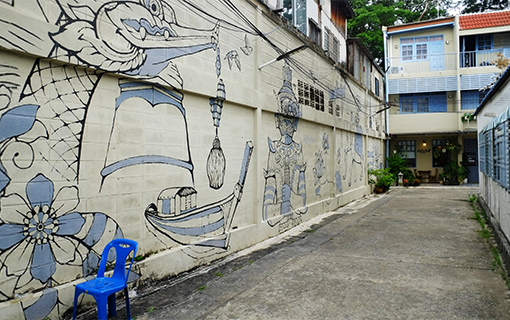
The small lane leading to Achcha Tea Shop and Homemade Bakery, enlivened by touches of local street art along its walls.
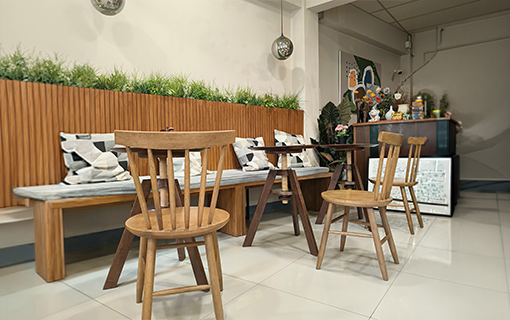
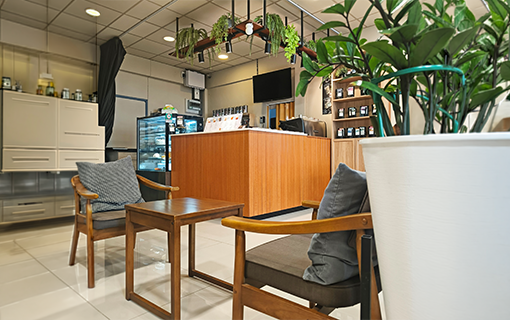
Inside Achcha Tea Shop and Homemade Bakery, a cosy neighbourhood café known for its selection of Indian teas, floral blends and homemade pastries.
Stopping at a locally owned café also allows visitors to contribute directly to the neighbourhood economy, an uncomplicated but meaningful part of responsible travel.
Near MRT Itsaraphap Station is another important heritage site: the Plai Na Muslim Cemetery, associated with Ton Son Mosque. Its presence reflects the long history of different religious communities living alongside one another in Thonburi.
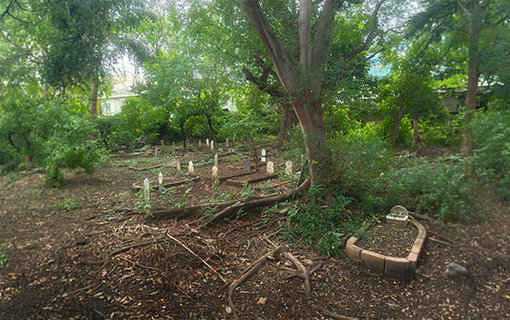
Plai Na Muslim Cemetery, associated with Ton Son Mosque, reflects the long-standing multicultural character of the Itsaraphap neighbourhood. Photography is generally not permitted, although respectful educational visits may be possible with prior permission.
Rather than viewing the area as a collection of isolated attractions, visitors can experience it as a living neighbourhood shaped by Buddhism, Islam, local businesses and generations of residents. Please remember that the cemetery remains a sacred place. Observe it respectfully and avoid entering or photographing people without permission.
A Different Kind of Bangkok Day Trip
On the day of our visit, the temple grounds were almost empty. Apart from us, there was only one international traveller exploring the complex.
The quietness was beautiful, but it also made the description of Wat Ratchasittharam as a “forgotten temple” feel surprisingly accurate.
It is unfortunate that a place with such important history, graceful architecture, Buddhist sculpture and traditional mural art remains unfamiliar to many visitors. At the same time, its peaceful atmosphere offers an opportunity to experience Bangkok differently—slowly, thoughtfully and without overwhelming the place or its community.
Wat Ratchasittharam does not need to become another crowded attraction. What it deserves is careful appreciation, sensitive conservation and visitors who understand that heritage is not merely something to photograph. It is something to respect and help preserve.
Travel Gently
When visiting Wat Ratchasittharam:
- Dress modestly and remove your shoes before entering sacred buildings.
- Keep conversations quiet, especially near monks or meditation areas.
- Do not interrupt prayers, ceremonies or meditation sessions.
- Ask permission before photographing monks or local residents.
- Avoid touching murals, Buddha images and historic architectural surfaces.
- Support small businesses in the surrounding community.
- Carry reusable drinking bottles and avoid leaving waste behind.
A quiet temple, a cup of fragrant tea and a walk through one of Thonburi’s historic neighbourhoods may seem like a simple itinerary. Yet together, they reveal a side of Bangkok that is often missed, a city where royal history, spiritual traditions and multicultural communities continue to live side by side.
Let Pacific Leisure take you beyond Bangkok’s familiar landmarks and into the quieter stories that give the city its soul. Our thoughtfully curated journeys invite travellers to experience local heritage with respect, curiosity and care, helping preserve meaningful places for generations to come.
Editor in Chief : Nampetch Siramanon
Editor: Pacific Leisure (Thailand)
Content Creator : Mr. Saroj Na Ayutthaya
Navigate
Terms & Privacy
Pacific Leisure (Thailand) Limited
No. 888/154, Mahatun Plaza Bldg., 15th Floor,
Ploenchit Road, Lumpini, Pathum Wan,
Bangkok 10330, Thailand
Phone : +66 22 542 966
Mobile : +66 63 224 1384, +66 81 138 2983
Email : info@pacificleisureth.com
Website : https://www.PacificLeisureTH.com
(TAT) Licensed No: 11/00161